I recently completed a project utilizing the largest fish I have worked with to date – multiple groups of nearly 3 kilogram rainbow trout.
An important consideration when deciding on what size of fish is the most appropriate for a given project Big fish mean big internal structures – less working with magnifying glasses and easier to find instruments that work. Some surgical procedures (catheterization, for example) are easier on these fish; however, there are some major drawbacks to big fish – namely, big fish are STRONG.
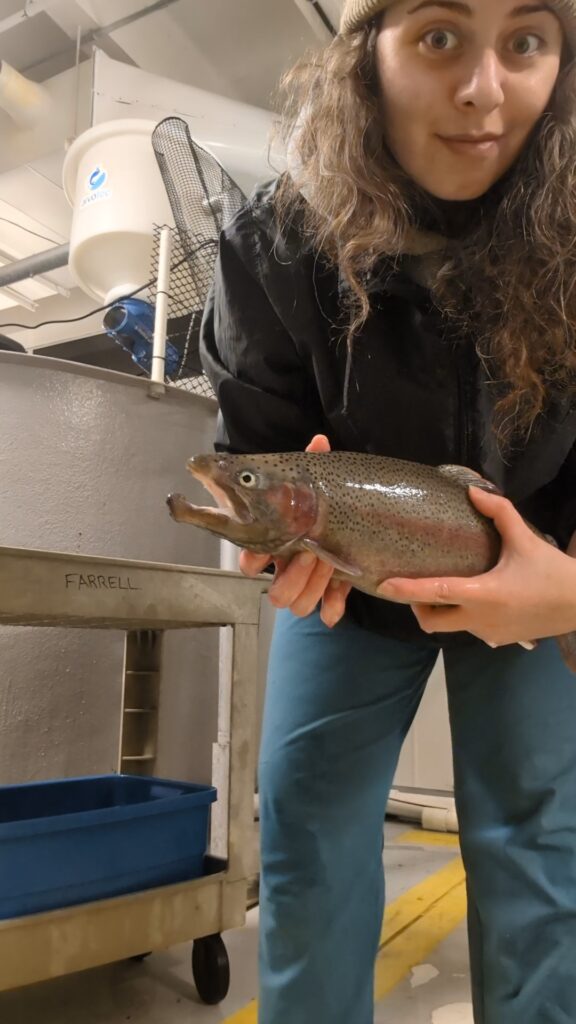
My post-doctoral supervisor nicknames fish this size “the box breakers”, meaning no matter what contraption you put these fish into, they will break out – acrylic black boxes, rubbermaid tubs, even some glass aquaria can be shattered by the power of these fish.
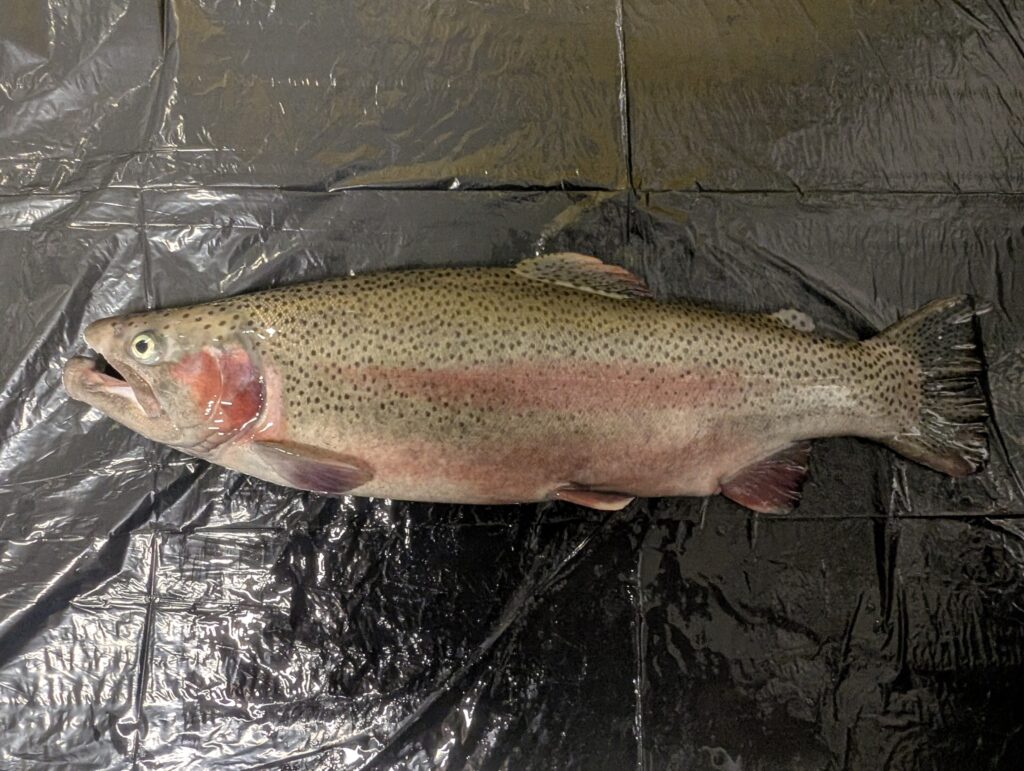
A male ready-to-spawn rainbow trout (Oncorhynchus mykiss)
In addition to the vibrance of colours, we see morphological changes such as the kype (the protruding hooked lower jaw). The kype is transient – it develops during spawning season and retreats after. The physiological plasticity under changing environmental signals is one of many things that peak my research interest.
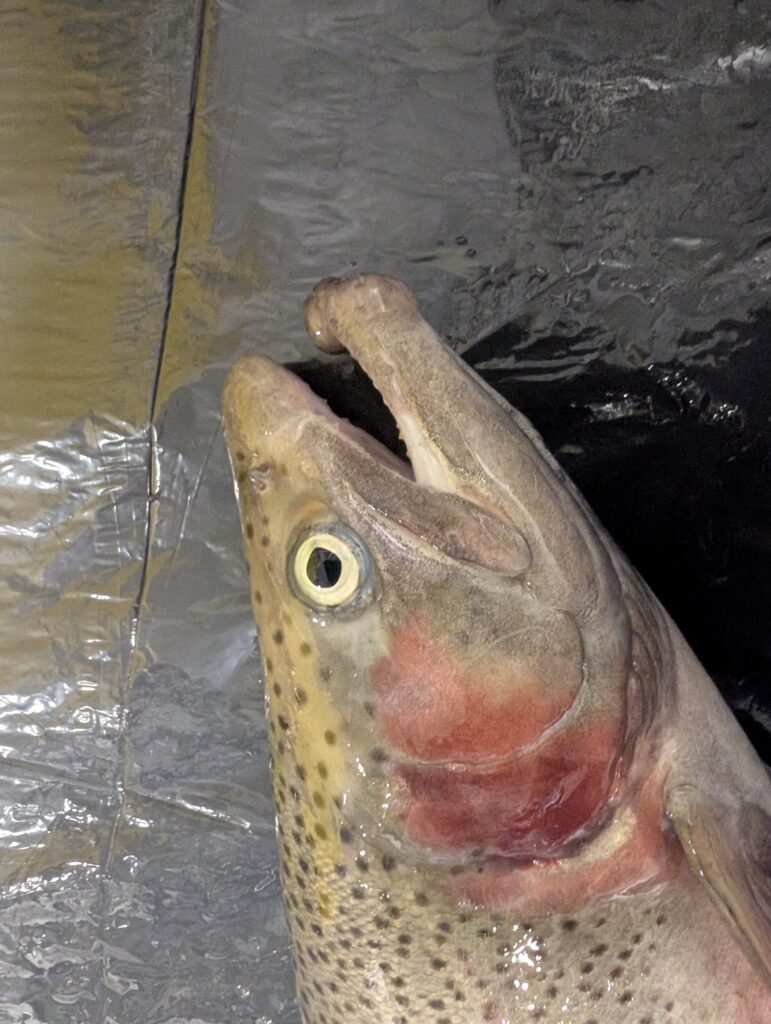
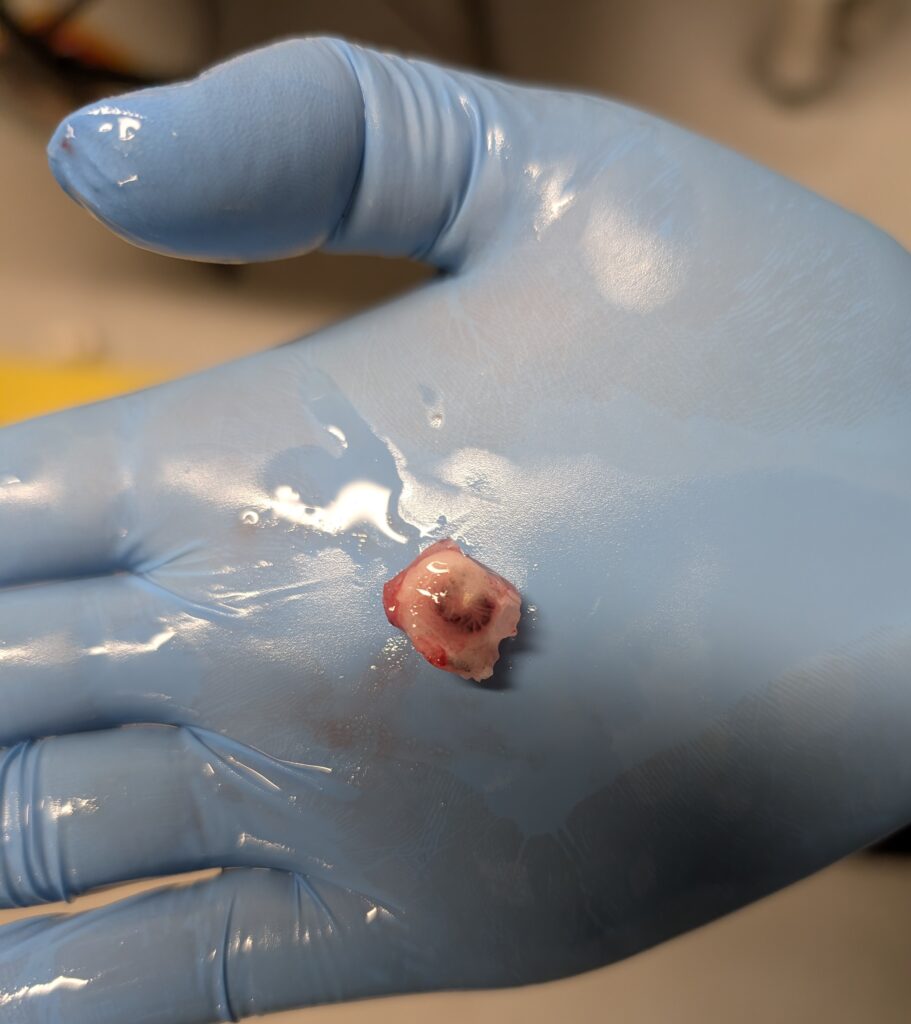
When these fish are spawning, they are under pressure to home and find mates – those two processes (as far as we know) are primarily olfactory-mediated.
One of my research interests is looking at whether the olfactory epithelium (pictured in the palm of my hand to the left) shows the same plasticity that we see in other tissues, such as the kype.
Will I want to work with “the box breakers” on all projects? Absolutely not. They are hard work (netting them is a more than suitable substitute for hitting the gym), they require large volumes of water and high flow rates, and they eat A LOT. But, when the reserach questions arise, we use the most appropriate species in the most appropriate life stage. As far as this project is concerned – bring on “the box breakers” and let’s learn!