There are some messages you just don’t want to receive – those that include the word “flood” are amongst them.
I received messages that two labs in my life flooded this month. One occupied, one vacant (thankfully). The occupied lab is within the aquatics facility, so the rooms themselves are somewhat able to withstand a bit of water (though nothing like the volume resulting from the catastrophic water heater failure that occurred right above the lab space).
There are a few lessons to be shared from the number (yes, its more than two) lab floods I have been witness and/or victim to:
If you have active animal experiments, curtain tarp them whenever feasible. It won’t save you from water from directly above, but it can help minimize any splashing into your experiment area. This is especially important for experiments that use sensitive instruments.
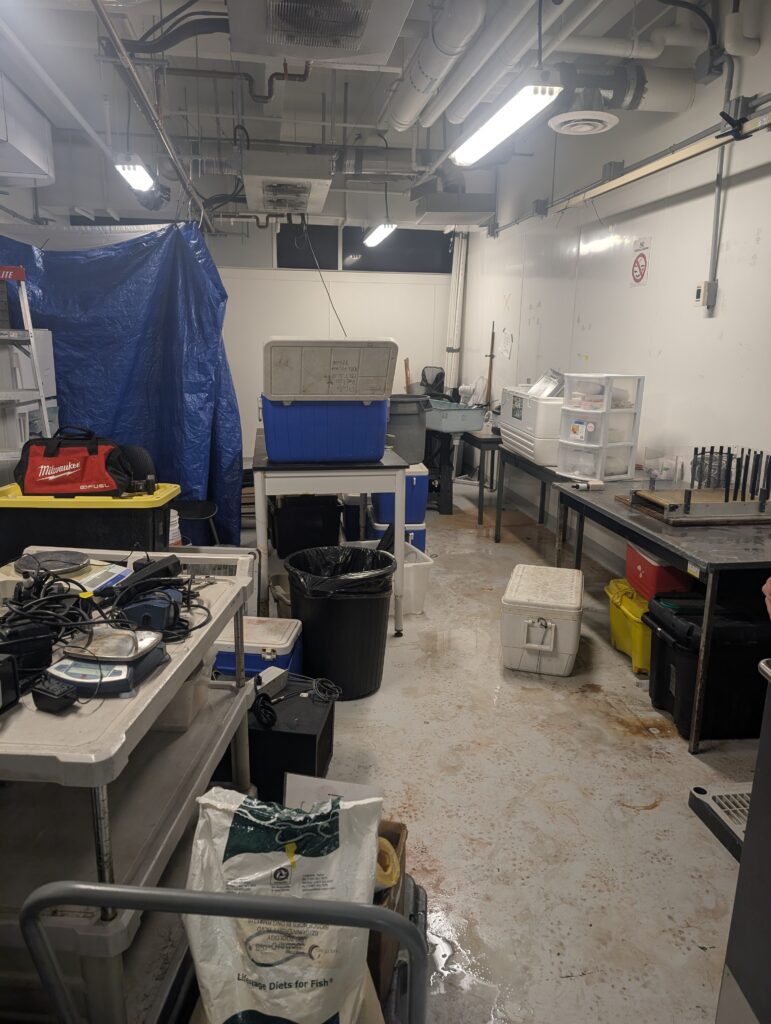
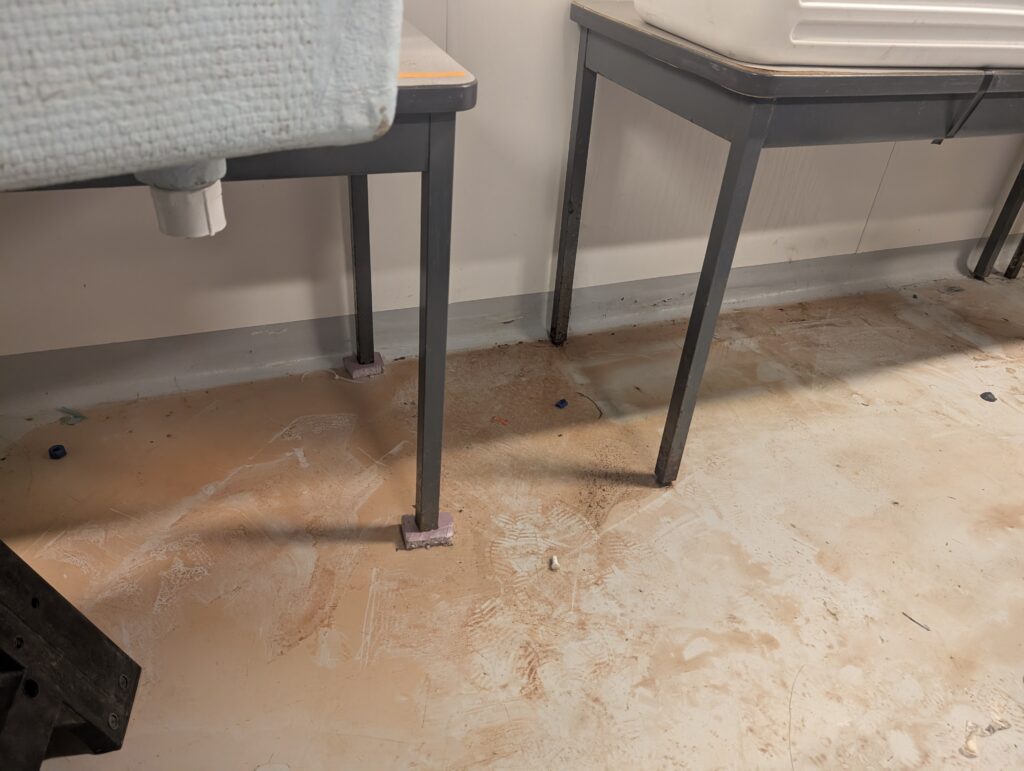
Bins with wheels are not waterproof. You’d be amazed at how much water can get in through those small holes for the wheel centers. Once the water is in, it also inherently washes out whatever is in the bottom of that bin (in this case, some machine oil from a gas mixing pump – it made cleanup far more difficult to be done safely with the environment in mind.
When triaging what is wet, I operate on a 3 pile (or 3 bin) system:
(1) This is soaked and inherently ruined
(2) This is wet and does not handle water well, but may be salvageable
(3) This got wet and needs to be cleaned, but it can survive water so should be fine
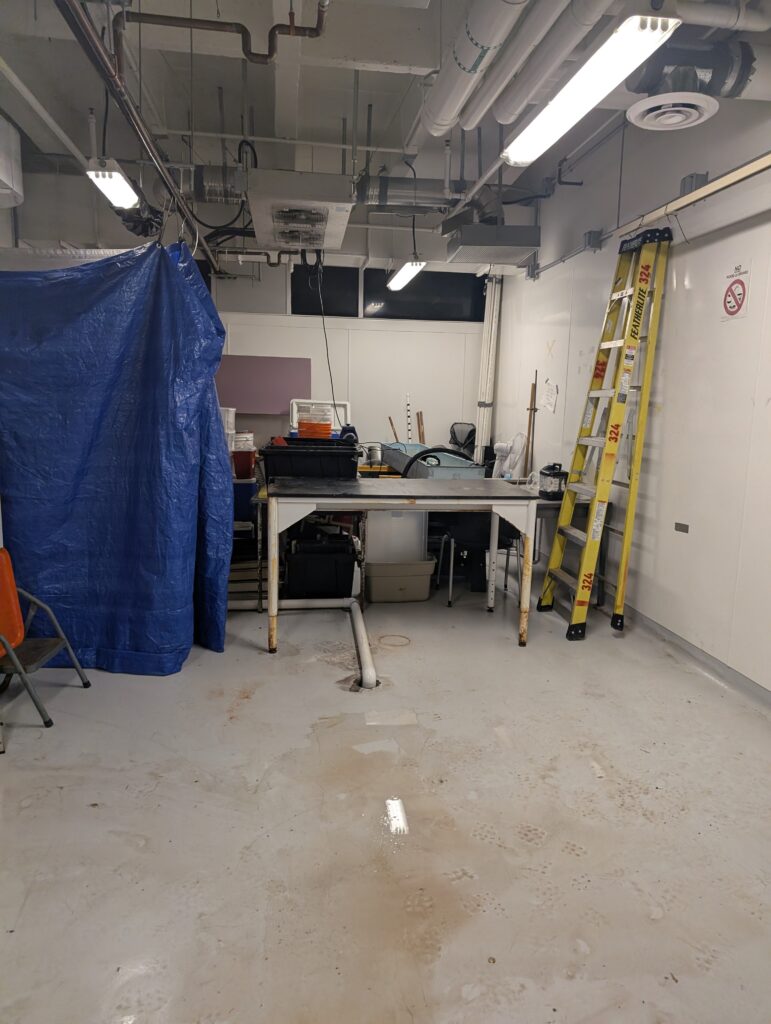
It can be very easy to be overwhelmed in the face of a flood, but calm in the chaos is the best path. Stop the water, triage the damage, then pause. You’d be amazed how well things dry out if you give them a bit of time and care.