“Vessels were continually aerated”, “Tanks were aerated to keep oxygen levels above…”, “Beakers were vigorously aerated” – these types of sentences are common in manuscripts in my field. Although they tell you what happened, they lack the ‘how’.
This is another example of a potential pitfall in experimental design.
Bottom line: how you aerate your vessels can affect your experiment.
In this post, I am going to outline some options for aeration and briefly speak to some considerations of each.
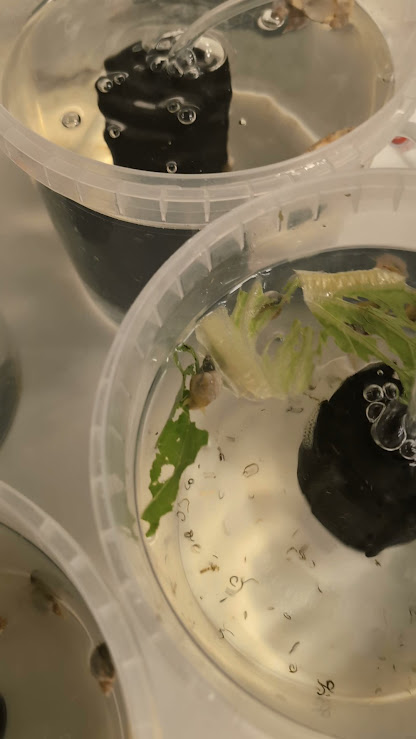
Sponge filters. These sponge filters (or corner filters with multiple layers) provide great aeration. They are weighted so will sink to the bottom of your vessel and stay there and provide good water movement in addition to aeration. The porous surface of the filter harbours nitrifying bacteria over time, so if you are wanting to sustain water quality over time, this may be a good option; however, if you are working with any contaminants, these filters tend to be a magnet for them and often skew the amount of contaminant in the water.
Air stones – these are very common. Same idea as a sponge filter, minus the sponge. These are smaller (therefore less surface area), but can still be a magnet for contaminants (especially microplastics). Further, many of these air stones are made with calcium-based materials and can increase your water hardness over time, especially if the air stone is old….
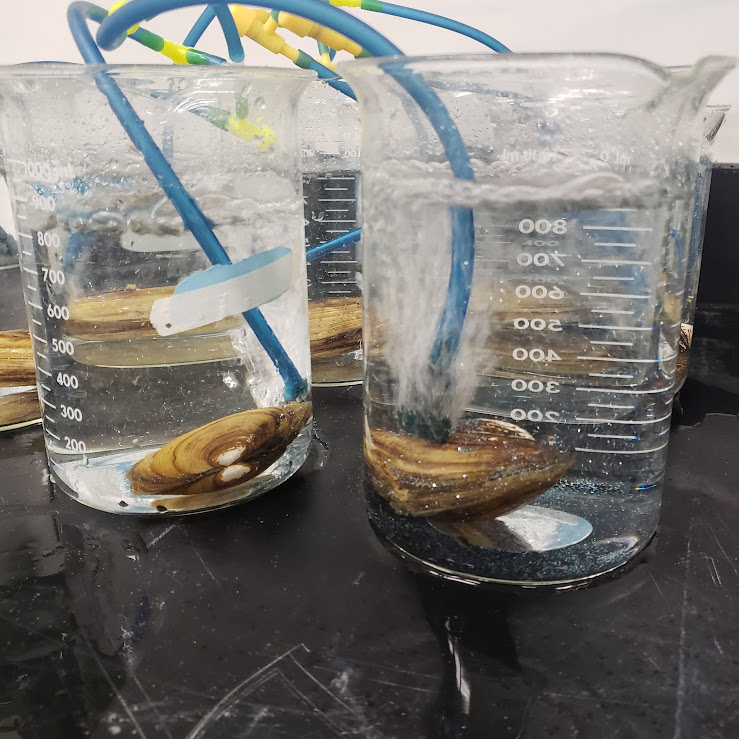
…like these. Those edges used to be clean and straight but they are now disintegrating!
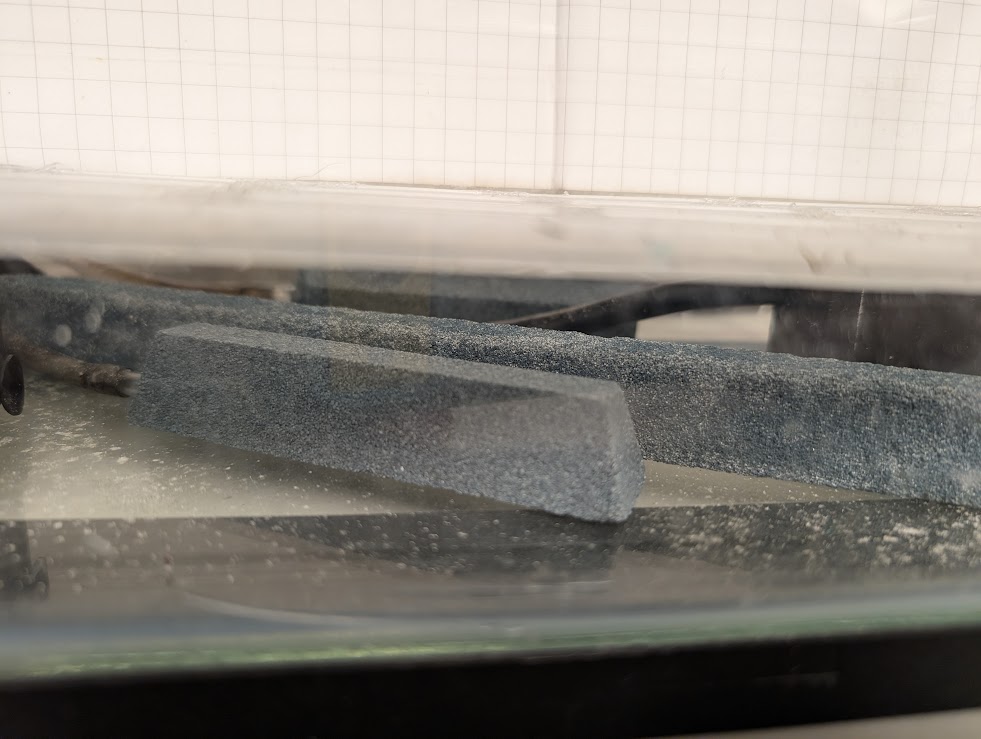
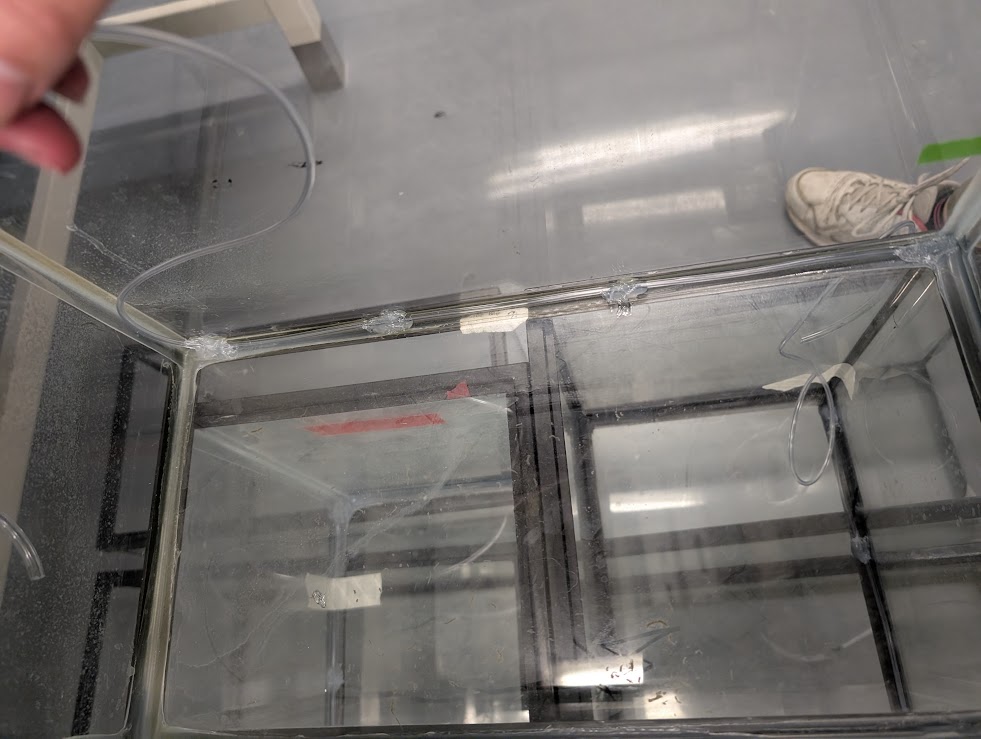
One of my favourites – just silicone the airline down to the tank. It stays at the bottom without the addition of other surfaces to interfere with contaminants. It does not work well on plastic vessels and it does take more time to allow the sealant to cure, but I tend to find it worth it.
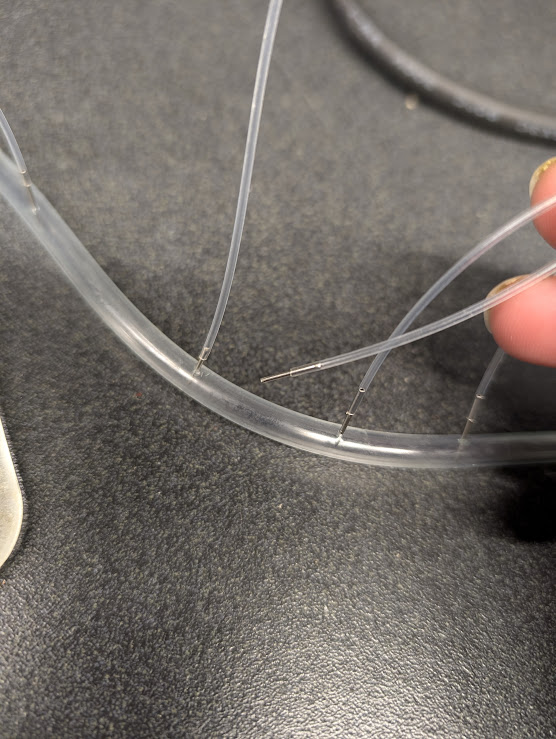
When you have many, or smaller, vessels, you can embed polyethylene tubing into airline to create an “aeration spider web”. Each of these small branches can feed individual small vessels. The issue here is that polyethylene tubing floats, so this aeration system would bubble at the surface but not through the vessel.
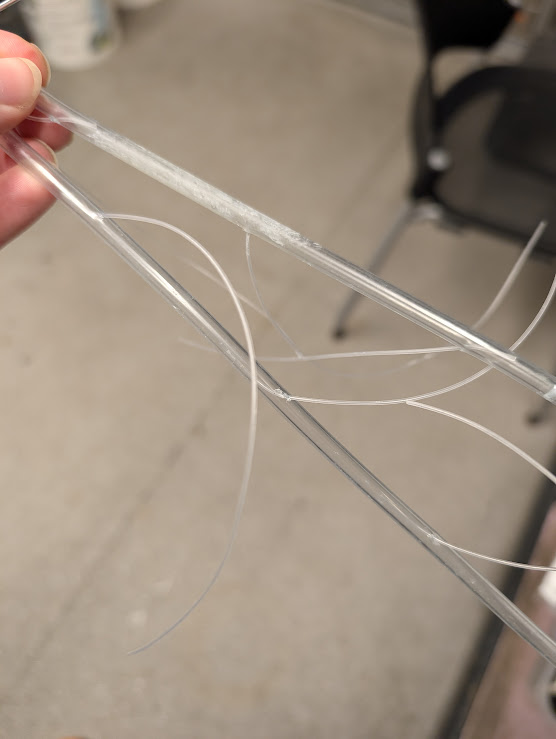
To address that, you can weigh down the polyethylene tubing using needles (point end into the main branch of airline, and non pointy section at the vessel-end of the small branch). Be mindful of your organism on this one – while the needle in the vessel is blunt, it can still cause some physical damage to soft-bodied or fragile organisms such as snails or betta fish.