Scientific catalogues are interesting, conference exhibitions are interesting – both offer a glimpse into the scientific equipment available to meet various research needs. While there are some times in which you find the perfect instrument for the job, I more often than not find inspiration rather than answers.
One of the issues with novelty, methods development, and pushing boundaries is that it takes specialized equipment that you can’t buy. Therefore, you develop the skills to make what you need. My time in the automotive industry and general curiousity in tinkering around and fixing things makes this part of my job particularly enjoyable.
My work in electrophysiology inherently comes with the pre-requisite of some basic electrical knowledge and skills
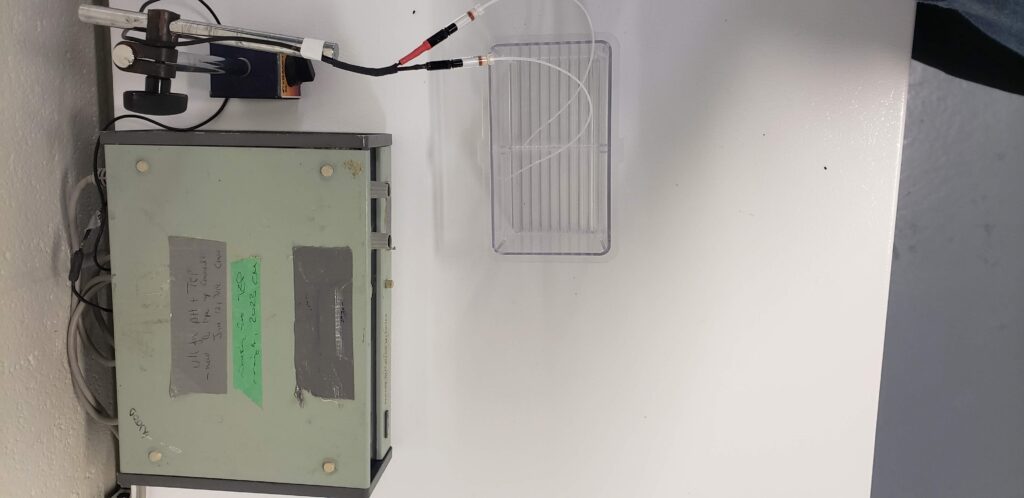
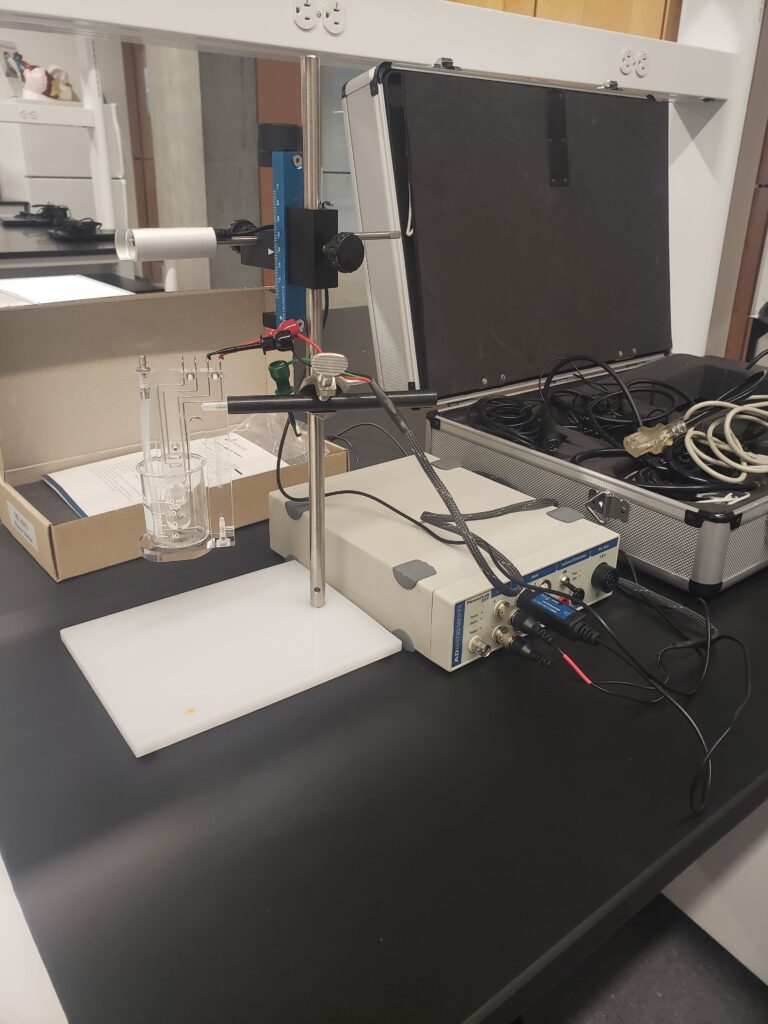
On the simpler side – understanding and keeping track of positive and negative wires, knowing how to properly ground, and understanding the capacity and resistance of different wires and connectors
But, as with everything – it either breaks or it does not exist. That’s where that toolbox comes in – soldering wire and rewiring to create electrophysiology instrumention is often a test of patience and precision.
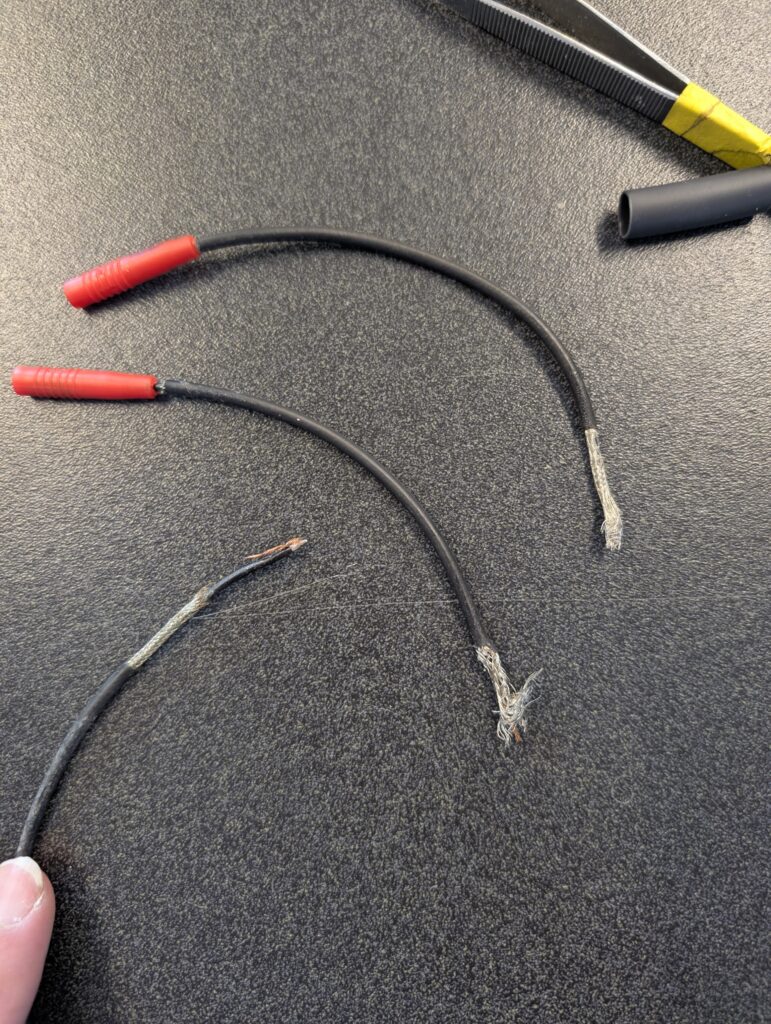
Perhaps my favourite challenge of using electrophysiology is that we use it for aquatic organisms — electicity in water is an added dimesion to experimental design that warrants careful thought and planning.
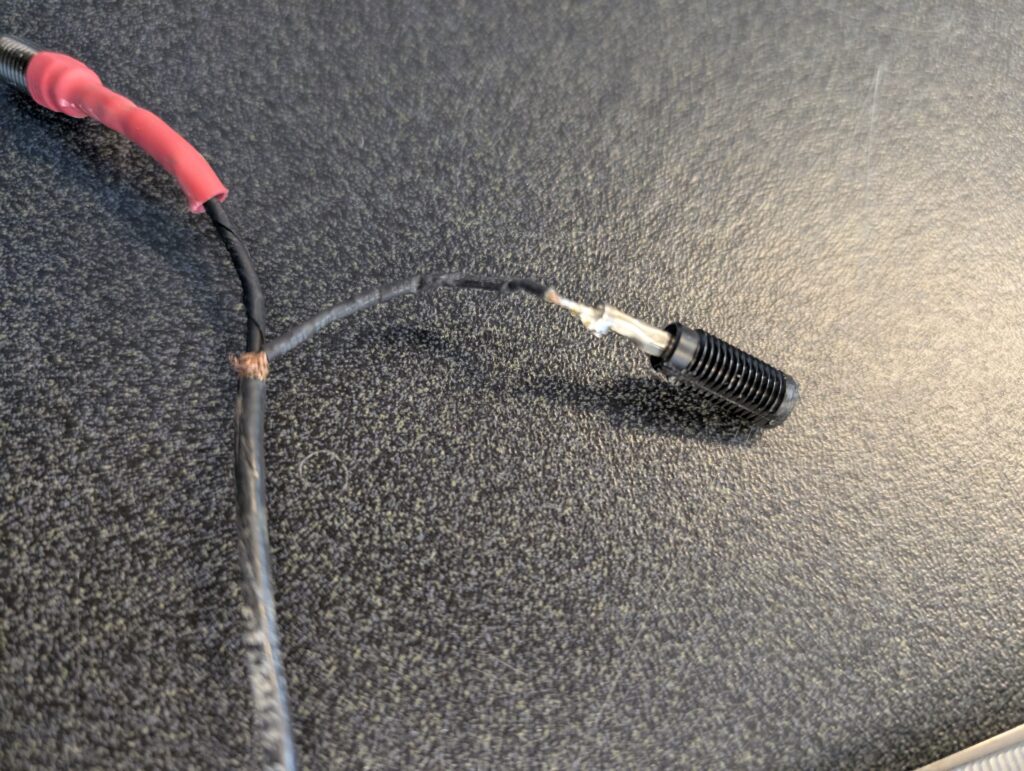
To that same end – you would be amazed how well 5mil nitrile gloves insulate…!