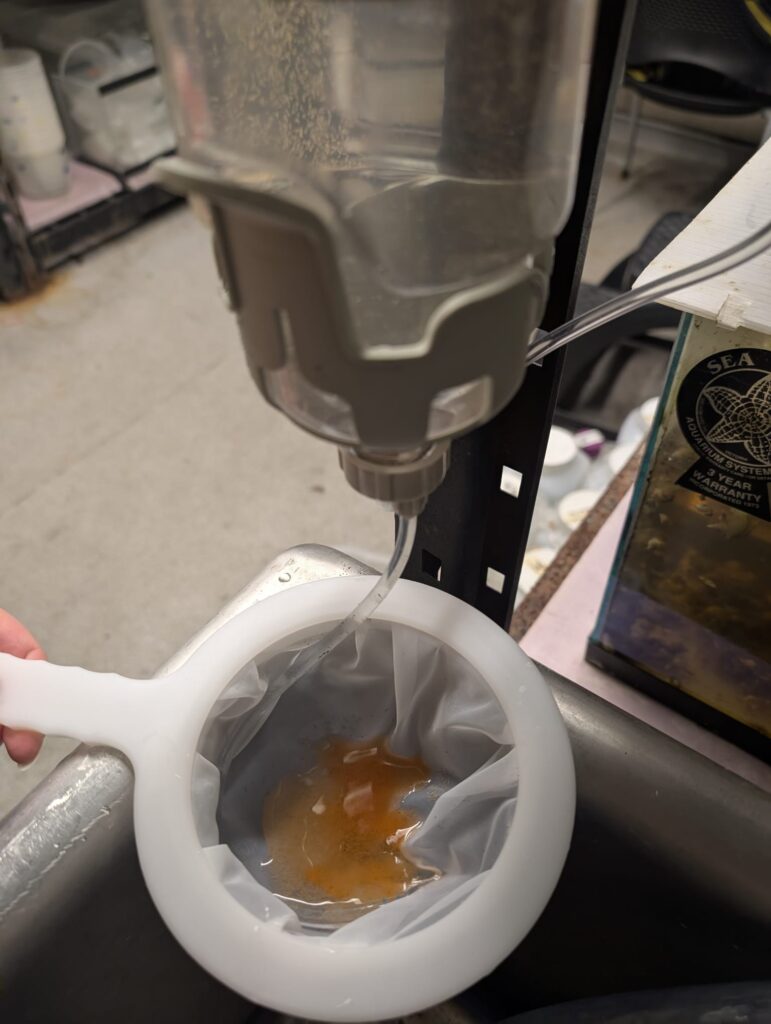
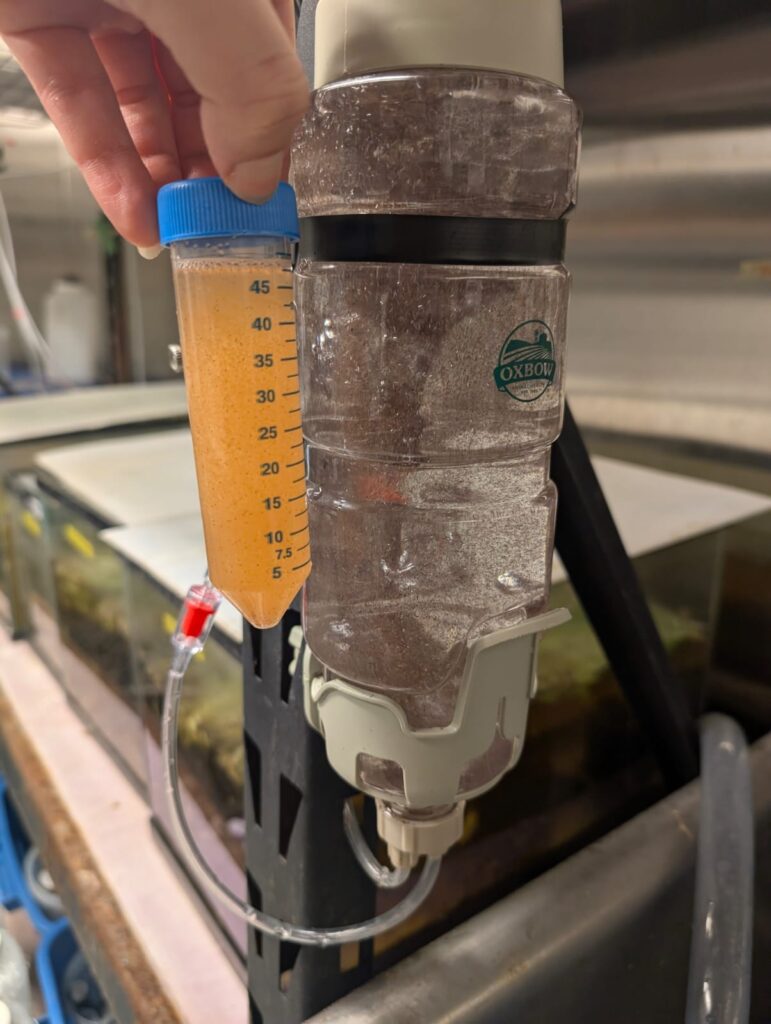
Artemia (brine shrimp) are commonly used in aquaculture as a nutrient-rich fish food. One of my current collaborations is centered around a sustainable aquaculture feed that does not negatively impact water quality as much as current feed options do.
Part of our current experimental framework involves my needing to hatch some artemia. Having worked alongside labs who hatch artemia, I have witnessed a few different setups. As you can expect (if you’ve read a few of these blog posts) I was taking mental notes of how I would cobble together my own system in the future. Those notes:
- Vigorous aeration from the very bottom is key so as to not let the cysts settle
- This needs to be done at a pretty warm temperature (25 degrees C minimum), so evaporation is a challenge
- You constantly have to drain, rinse, and refill – proximity to a sink is an asset
Fast forward to now: it is post Black Friday and leading into Christmas. I need to hatch some artemia. Shipping times are not helpful and frankly I am not the type of person to pay for a “ready out of the box” type of system. So, I recall the above list and start conciously thinking about it as I go through my daily life.
I often find myself reflecting on what it means to be “open-minded”, and while I agree with the more common definition of the phrase (being willing to consider new ideas, listening, and so on), I also think that being “open-minded” as a researcher means having the ability to visualize alternatives – whether it be reimagining how data is best presented in a graph or how everyday items can be repurposed.
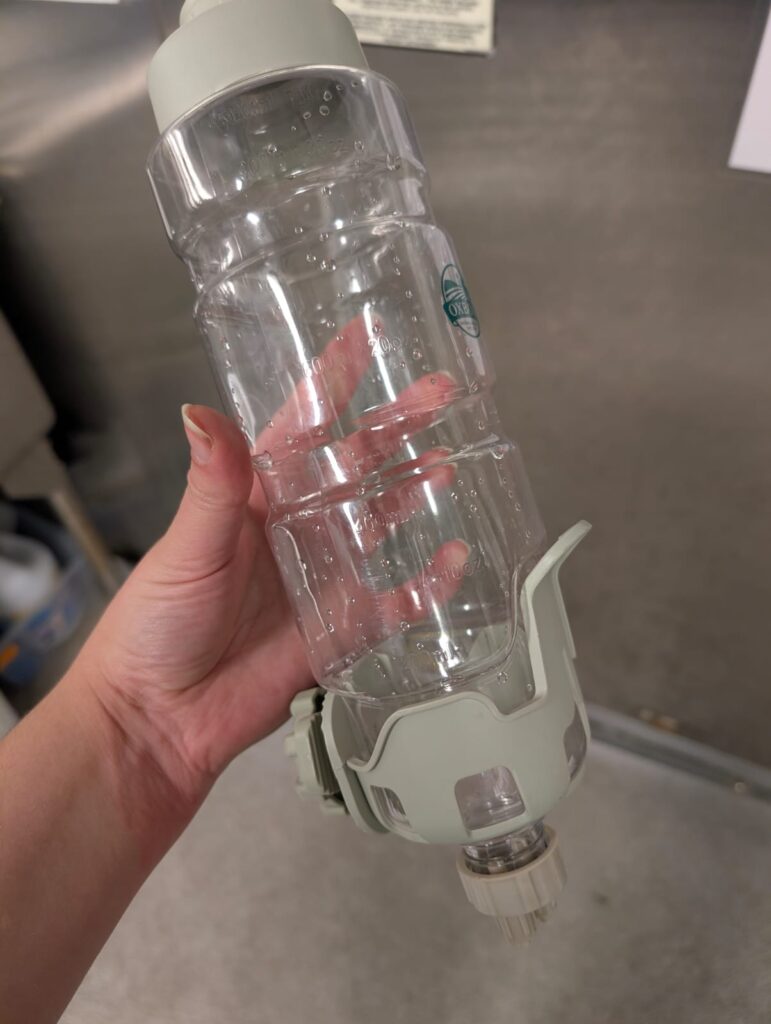
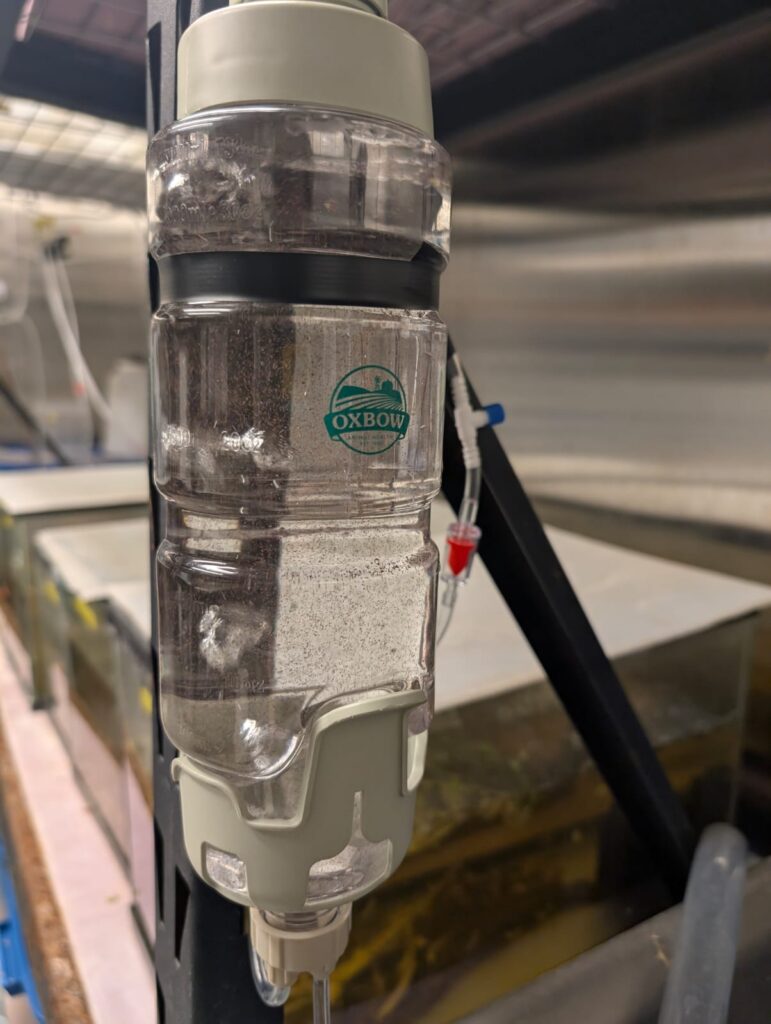
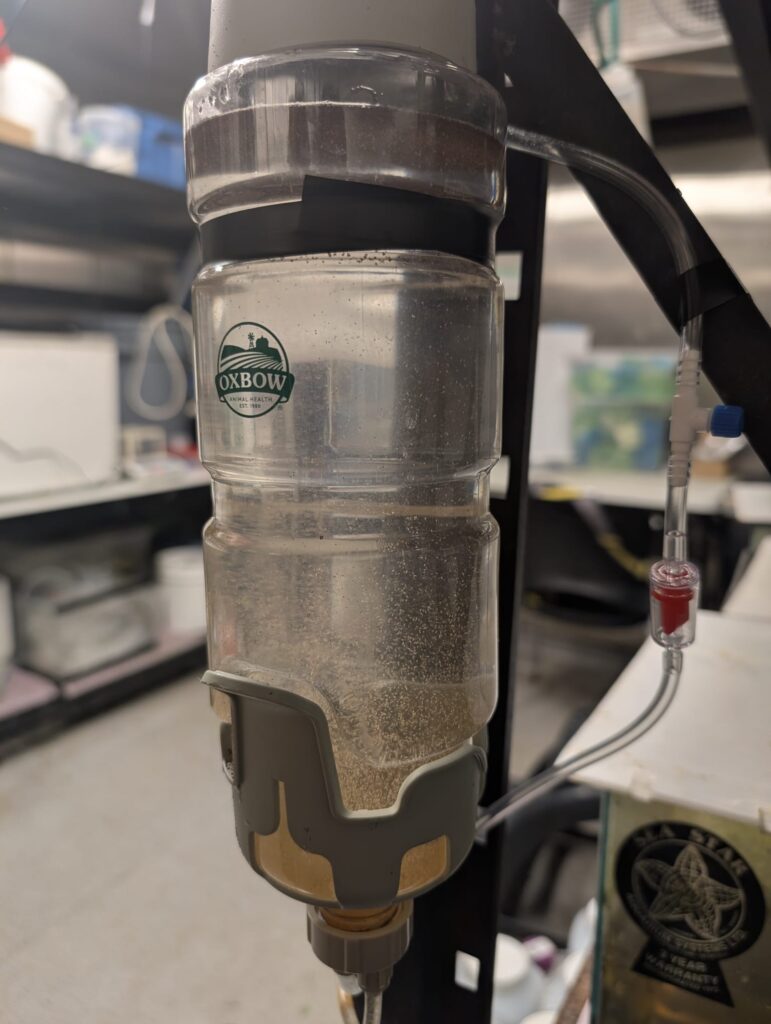
I trained Ryland to drink using a hamster bottle early on – we were travelling a lot and I wanted him to have access to water without taking up floor space in his crate and his bedding inevitably getting wet. Well,what is a hamster bottle but a mounted upside-down water bottle? Seemed like a suitable artemia vessel to me.
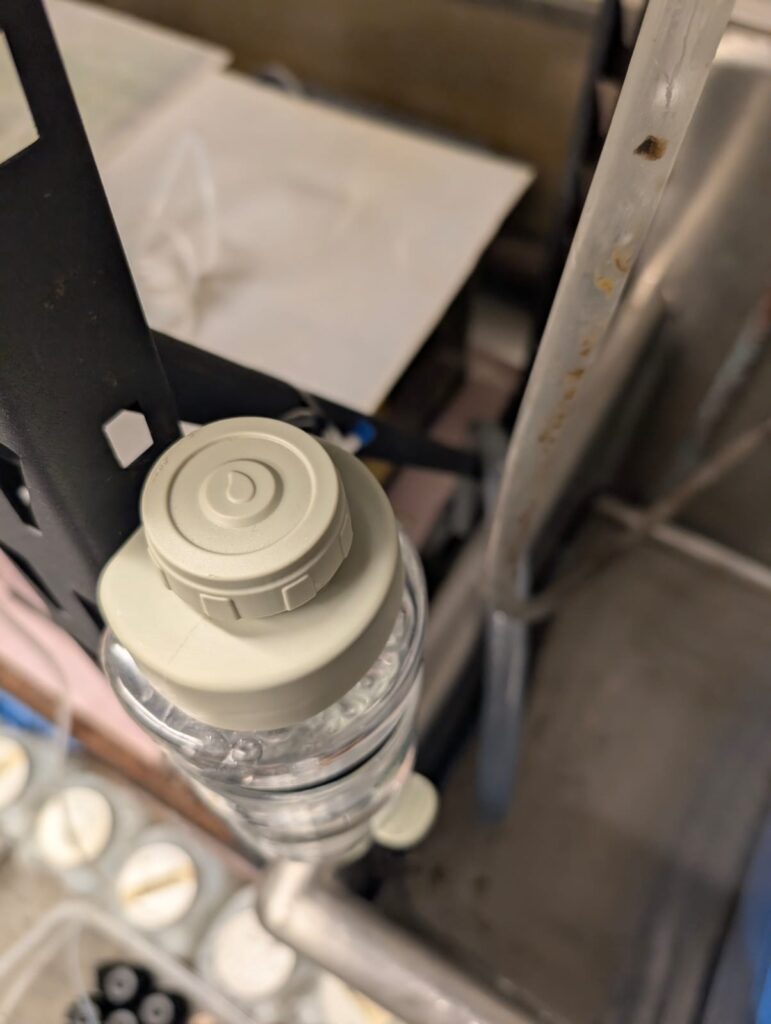
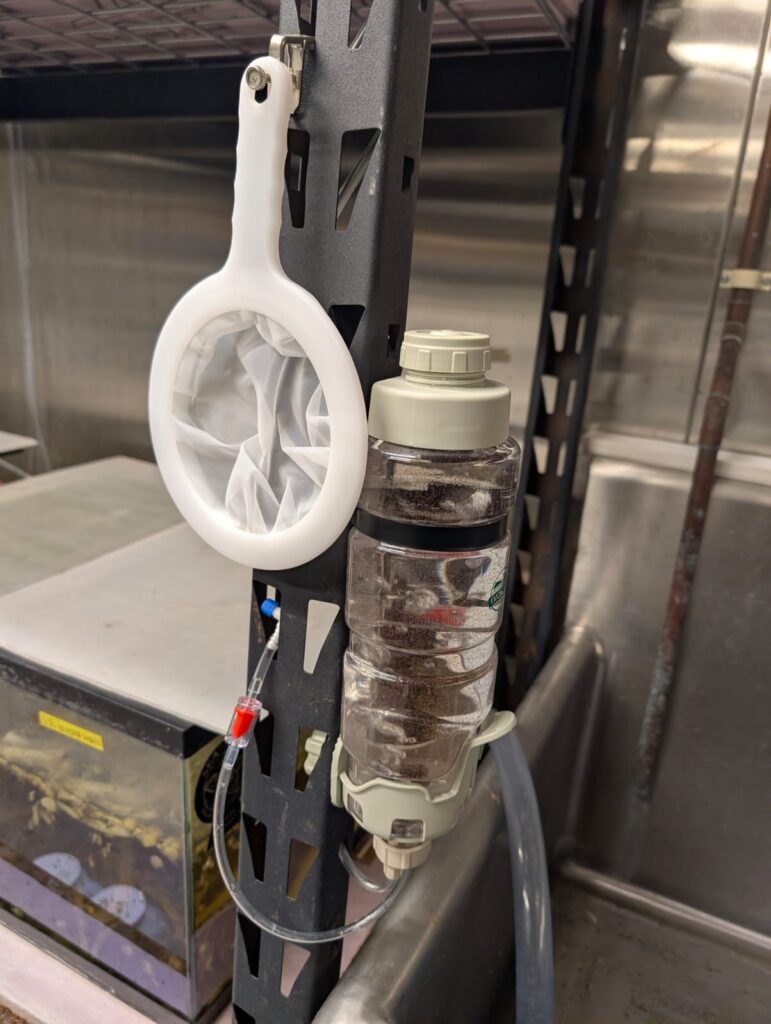
I had a carbon dioxide system in an aquarium I had previously and you can use these two-port caps to seal them. Sure enough, they fit perfectly on to this hamster bottle. The two ports meant I could aerate through one (directly from the bottom!) and drain through the other. Add a hose clamp to prevent any leakage from the drain line (or double up your aeration when not draining) and you’ve got yourself the framework of an artemia setup.
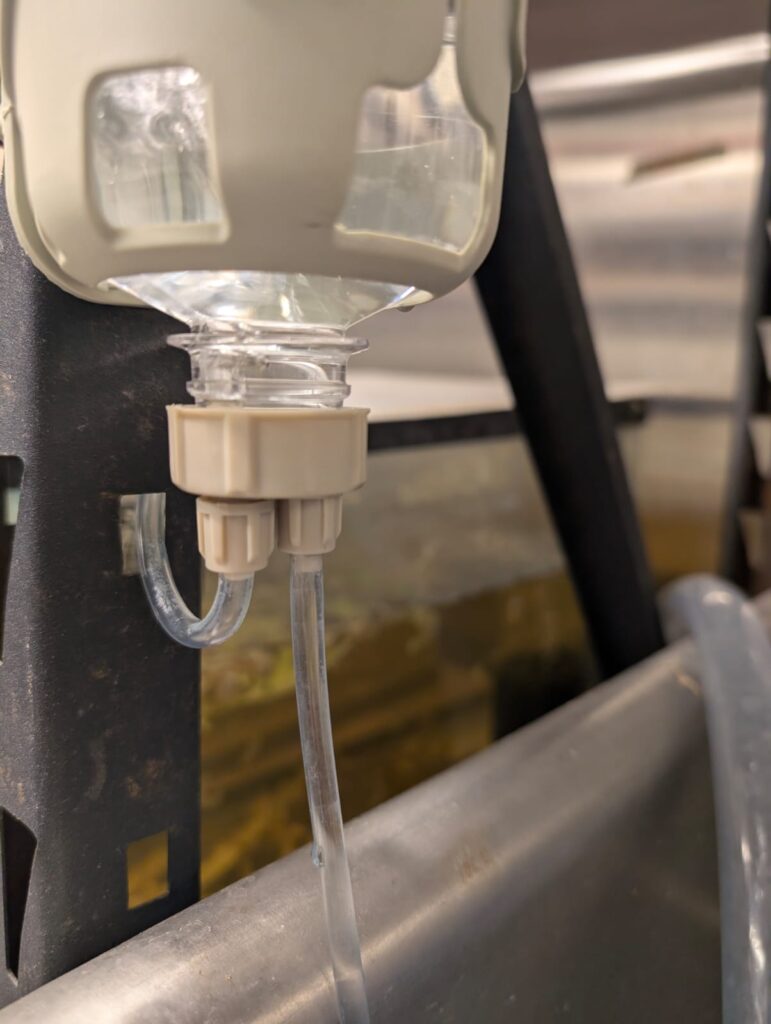
The hamster bottle is meant to mount on a wire cage, so I mounted it on the shelf beside the sink. The hose from our dechlorinated water tap could be put right in to the setup to rinse and refill.
Added some salt, added some artemia, and we are in business. The hatch rate is very good, especially considering that this room is at 25 degrees C and the lights do turn off at night.